

WOOD SCIENCE
The best types of wood for high-quality cutting boards
In this blog article, we want to present the advantages and characteristics of different types of wood as well as what to consider when choosing the wood type.
At the very end, we also have a clear recommendation on which type of wood is best suited for you personally. the right one is.
But let's start at the beginning:

Beech (Fagus sylvatica)
Characteristics:
- Hardness: Beech is a hard wood with high density, making it resistant to cuts and scratches.
- Color: It has a light, reddish-brown color that can darken over time.
- Grain: Beech has a fine, even grain that provides a smooth surface.
Advantages:
- Robustness: Beech wood is extremely resilient and long-lasting, ideal for daily use.
- Hygiene: The dense cell structure makes it less porous and less prone to bacteria.
-
Availability: Beech is widespread in Europe and therefore more affordable and sustainably available.

Oak (Quercus spp.)
Characteristics:
- Hardness: Oak wood is very hard and durable.
- Color: It has a characteristic yellow-brown to golden color.
- Grain: Oak has a pronounced, coarse grain that often creates decorative effects.
Advantages:
- Robustness: The hardness of oak makes it ideal for heavy use.
- Aesthetics: The distinctive grain and warm color give oak cutting boards a rustic yet elegant look.
-
Durability: Oak wood is very resistant to wear and can last for decades with proper care.
Maple (Acer spp.)
Characteristics:
- Hardness: Maple wood is known for its hardness and strength.
- Color: It has a light, uniform color ranging from white to pale yellow.
- Grain: Maple has a fine and even grain that ensures a smooth surface.
Advantages:
- Hygiene: The dense cell structure makes it less porous and less prone to bacterial penetration.
- Appearance: The light color and uniform grain give maple cutting boards an elegant, timeless look.
-
Longevity: Maple wood is extremely durable and withstands even intensive use.
Ash (Fraxinus spp.)
Characteristics:
- Hardness: Ash wood is hard and elastic.
- Color: It has a light, almost whitish color with occasional reddish or brown streaks.
- Grain: Ash has a striking, straight grain.
Advantages:
- Flexibility: The elasticity of ash wood makes it less prone to breaks and cracks.
- Appearance: The distinctive grain and light color make ash wood an attractive choice for cutting boards.
-
Robustness: Ash wood is durable and resistant to wear.
Olive (Olea europaea)
Characteristics:
- Hardness: Olive wood is very hard and dense.
- Color: It has a warm, golden to dark brown color with characteristic dark streaks.
- Grain: Olive wood has an irregular, decorative grain.
Advantages:
- Aesthetics: The unique grain and rich color palette make every olive wood cutting board one of a kind.
- Durability: The density and hardness of olive wood make it extremely resilient and long-lasting.
-
Care: Olive wood absorbs oil well, keeping it supple and resistant to moisture.
Advantages of end grain boards
End grain boards, also called end wood, consist of wood pieces whose fibers run perpendicular to the cutting surface. This type of cutting board offers several advantages:
Advantages:
- Self-healing: End grain wood can absorb and "heal" small cuts and scratches as the wood fibers close up again.
- Gentle on knives: Due to the vertical orientation of the wood fibers, end grain wood is less damaging to knife blades, extending the life of your knives.
- Durability: End grain boards are more robust and resistant to heavy use and moisture.
- Aesthetics: The unique pattern of end grain wood gives cutting boards an attractive and individual look.
Conclusion
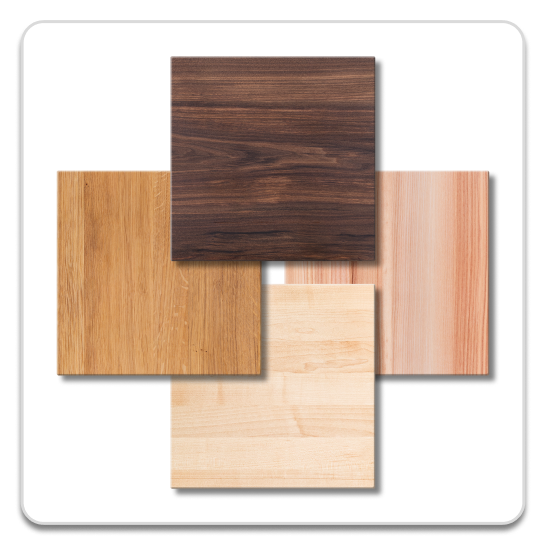
Choosing the right wood for a cutting board depends on individual needs and preferences. While beech, oak, maple, ash, and olive each offer their own unique advantages, there are hardly any functional differences between them in everyday use.
The only rule of thumb is:
The higher the quality of the knife, the softer the wood.
Bamboo is so hard that it dulls knife blades noticeably faster than regular hardwoods like oak or maple.
So if you value a sturdy and almost indestructible cutting board, bamboo is a good choice. Provided you accept that you will need to sharpen your knives a bit more often.
However, if you have high-quality knives and want to protect the blades, softer wood is a better choice. Walnut is the best option in our range for the highest-quality blades (+300 EUR).
OUR TIP
All types of wood in the range are fully suitable for use as cutting boards. You can practically do no wrong.
So simply choose the type of wood you "fall in love" with.
This is – just like in real life – the best foundation for a happy relationship and, from our experience, the best strategy when making new purchases. 😍