

HOW TO: CLEAN YOUR KITCHEN WORKBENCH
At first glance, our kitchen workbenches (any model) look much more complicated than they are - and the same goes for cleaning.
The container system can also be used for cleaning, which is a tangible advantage in everyday cleaning:
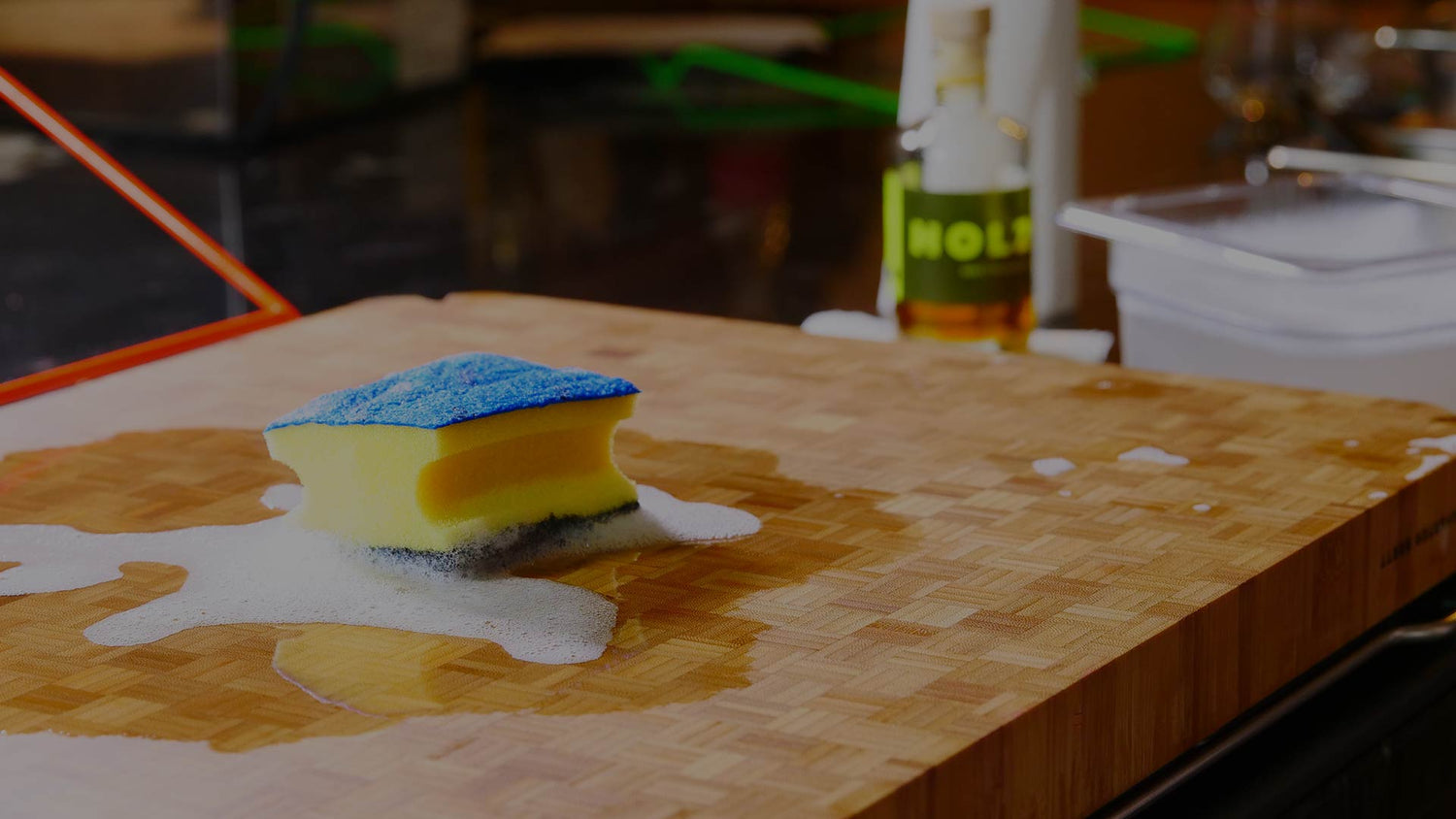
A container is filled with soapy water, leftover food on the board is thrown into the attached waste bin, and the board is thoroughly scrubbed right in place - excess soapy water also flows into the waste bin after scrubbing.
The board no longer has to be carried to the sink to clean it. Over time, this new cleaning routine becomes ingrained and is simply fun compared to cleaning normal cutting boards in sinks that are too small.
Here is the procedure in detail, step by step:
01. THE DAILY DOSE OF LOVE - CLEANING AS YOU GO
1) EMPTY THE BOARD:
Dump leftover food/waste etc. into the still attached waste bin while the board is still assembled.
2) SCRUB:
Thoroughly scrub the board with hot water and plenty of soap on the spot with a pot sponge. Then scrape off the dirty soapy water with the help of the sponge into the attached waste bin.
3) DISASSEMBLE:
Dismantle all remaining containers, put the waste into the bin and the containers into the dishwasher/sink.
4) LET DRY:
Dry the board thoroughly with a kitchen towel, pull out the front brackets if necessary and also put them into the dishwasher - as a rule, however, it is sufficient to wipe and dry the brackets briefly by hand.
5) FLIP REGULARLY
To prevent uneven wear, please flip the board regularly and use it as evenly as possible.
(Exception BASIC, since it can only be used on one side. If your BASIC needs maintenance, see below.)
02 PROFESSIONAL TIP: PEELING FOR THE BOARD
Sometimes the board absorbs smells for a short time - especially with garlic or onions.
A simple household remedy helps here, which can help in the short term (smells usually disappear after a few days by themselves):
1) PEELING PASTE:
Make a creamy paste from the juice of a fresh lemon and regular salt on the affected area directly on the board.
2) SCRUB LIKE THERE IS NO TOMORROW:
Spread the paste with a pan sponge over the affected areas (usually the front working third) and scrub it thoroughly. This procedure actually has a similar effect to peeling: The top layer of the board is lightly sanded and deposits are removed, the lemon juice also neutralizes odors.
3) ALLOW TO DRY
Allow to dry overnight, then apply a layer of oil to the treated wood.
In principle, although wooden boards are more hygienic than plastic boards (here is our article on the subject), for foodstuffs such as meat (or chili and garlic), we always recommend using our Easy Pads, which you can simply put in the dishwasher afterwards. This keeps the different areas separate and you can still use the board's container system.
To process meat (or also chili and garlic), we always recommend using a separate chopping board, for simplicity’s sake made of plastic, which is simply placed on the Frankfurt board and can be put into the dishwasher afterwards. This way, the various components can be kept separate and the container system of the Frankfurt board can still be used.
03 Cleaning the containers
The containers are easy to clean and basically indestructible.
If you want to keep them looking like new, there is one thing you should know:
The plastic containers have a highly polished surface. If you use a pot-cleaning sponge to clean them by hand, you will leave fine micro-scratches on the surface, which causes the surface to turn "dull" after a while.
This does not cause any real damage to functionality, the container just isn’t as pretty anymore.
If this would bother you, you should only wipe the containers with a cloth and put them in the dishwasher afterwards.
-------------------------------------------------
And in case anyone is wondering if we don’t find it quite strange to write 2 DIN A4 pages about cleaning cutting boards: Yes, absolutely.
But it’s also a bit cool - after all, it’s not a normal cutting board.