


THE BOARD SESSIONS | VOL.1
OUR CULINARY HEARTBEAT.
At the stove
On the stove
Joseph & Johannes Schreiter
TEAM FRANKFURTER BRETT
The perfect jus
Oven Tomatoes & Parmesan Rösti
Lasagna Ricicleta
Jus.
(Pronounced: SCHÜÜÜÜ. [ʒy] With a French J at the beginning, like in Jalousie or Journal.)
+
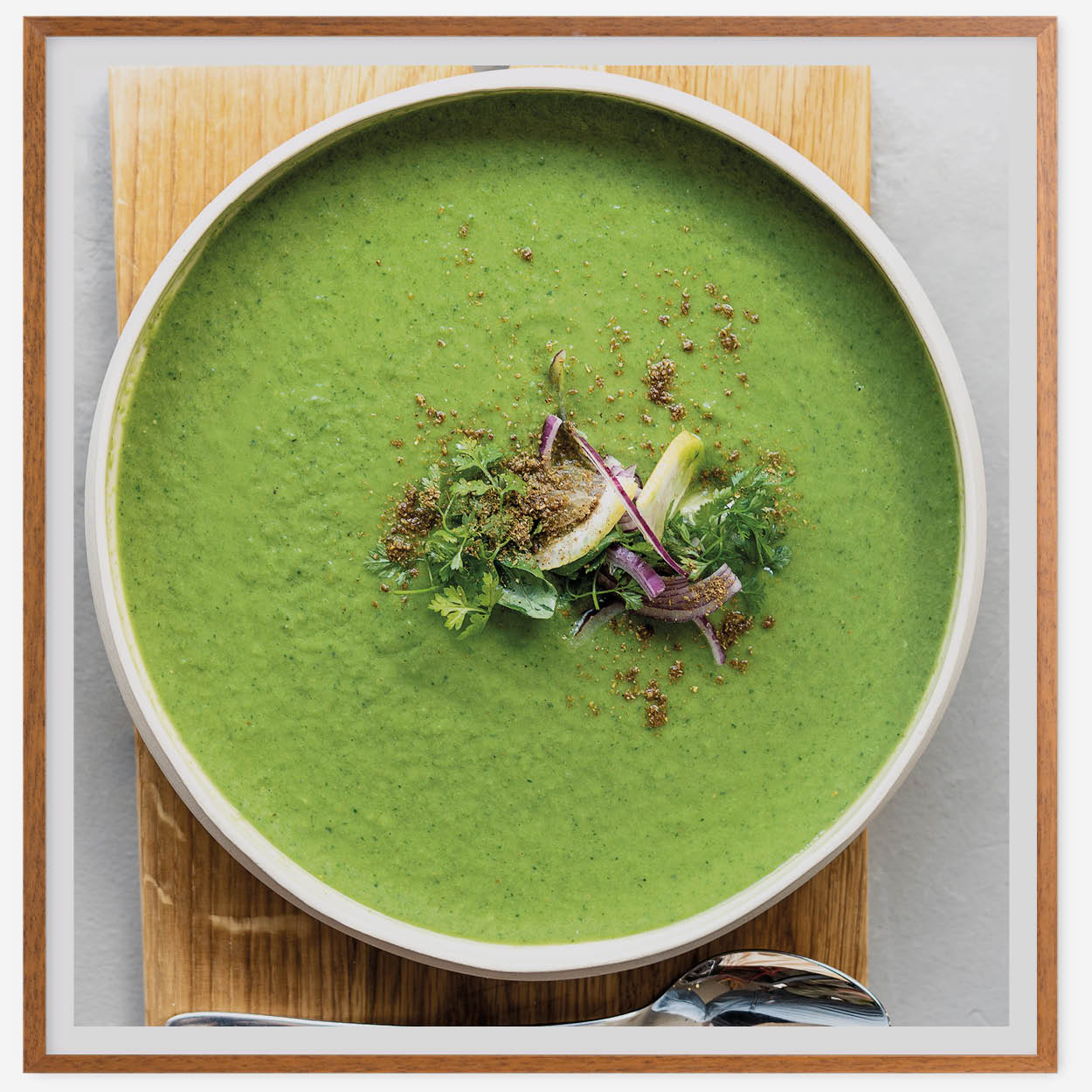
That fragrant, creamy, golden-brown essence you usually only get in upscale restaurants or at Christmas, and which is often the best part of the whole meal.
It’s not the classic dishes like roulades or really demanding recipes that we primarily associate with jus—quite the opposite:
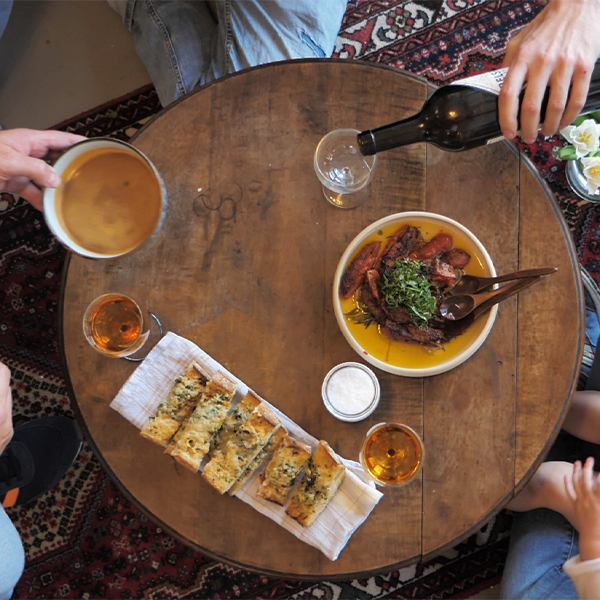
It’s the relaxed dipping, finger-licking, and uncomplicated enjoyment at the end of a lively evening that defines jus for us and why we’ve put it front and center here in the recipe with crispy Parmesan white bread, a generous bowl of jus for dipping, and a portion of oven tomatoes:
Here, the jus is unabashedly the star of the evening with all its nuances; you eat with hands and feet, and everyone chews slowly with closed eyes because everything just fits perfectly together.
AMAZING.
Ideally enjoyed in the evening on a warm summer balcony with vermouth or ice-cold white wine.
The full recipe for our heartwarming afternoon, including oven tomatoes and a bit of kitchen table philosophy on the social-revolutionary aspect of roasting juices, can be found further down. +
LASAGNA RICICLETA
Traditionally, the base for a jus is a big pile of roasted vegetables that are usually discarded after boiling—which has always bothered us. It also makes shopping really expensive when you only get about 1.5 liters of pure jus.
This time we simply did the obvious—a quick lasagna. But without a proper recipe, because what makes this lasagna special is the roasted vegetables that are already there. A few notes on the lasagna as a hint can still be found after the jus recipe.
We hope you enjoy trying it out!
Joseph & Johannes
The perfect jus.
// Luxury for Everyone
GOOD JUS holds a similar place in our culinary world as caviar, champagne, oysters, or any food of truly exceptional quality.
Juice, however—and this makes it very special among the luxury goods listed above—can’t really be bought and must be made yourself.
That’s why it holds a democratic place of honor among the great circle of culinary extravagances:
Jus is luxury for everyone because anyone can make jus. All it takes is time, dedication, vegetables, red wine, and spices.
You just have to consider yourself worth the effort.
-
LUXURY RESERVE
For us, it has proven especially enriching in everyday life to have a glass of good jus stored in the fridge, especially when surprise guests arrive whom you want to impress with a casual but still sophisticated dish, or simply as a small luxury reserve on call.
A glass of everyday jus elevates dull sandwiches to a whole new level, just as it greatly enhances any otherwise simple meal – whether simple eggs in a glass with fresh herbs, a hangover breakfast on Sunday with eggs and bacon, a classic mushroom omelet, or plain fried potatoes with pickles.
A few spoonfuls of roast juice turn an ordinary everyday moment into an explicit moment of enjoyment with class.
-
ROAST JUICE?
Our recipe is not vegan by chance – we developed it when we still worked at MARGARETE in Frankfurt (the restaurant of Raffaela Schöbel and Simon Horn, where FRANKFURTER BRETT actually started and where we developed the first prototypes in the kitchen) and cooked a vegan menu evening. Back when vegan was still new, in 2014.
A guest once sparked our ambition by saying that vegan food can never be perfect because there can be no good vegan jus.
Even though we haven't lived vegan for a long time, this recipe is still our flavor benchmark when it comes to jus – nothing is missing.
If you want to use bones and meat, simply roast them at the beginning and then simmer them later.
- THE BOARD SESSIONS | VOL.25
- "THE PERFECT JUS"
for about 1.5 liters
------
- 3 bottles red wine
- 1 liter water
- 1 bunch soup greens (carrot, celeriac,
- leek, parsnip), completely diced
- 200 g mushrooms, diced
- 200 g shiitake, diced
- 1 large vegetable onion
- 300 g smoked tofu
- 1 small bunch parsley, stems finely chopped,
- leaves picked off
- 3-4 bay leaves
- 5 juniper berries
- 2 large garlic cloves
- exactly the same amount of ginger
- 1 sprig rosemary
- 2 sprigs thyme
- 1 handful oregano
- 6 leaves fresh sage
- 1 tsp caraway seeds
- 2-3 star anise
- 2 tbsp green peppercorns
- 1 tbsp mustard
- 3 tbsp soy sauce
- 0.5 tube tomato paste
- 5 tbsp plum jam
- some thickening agent
- 150 g butter, diced and chilled (for finishing the sauce)
STEPS
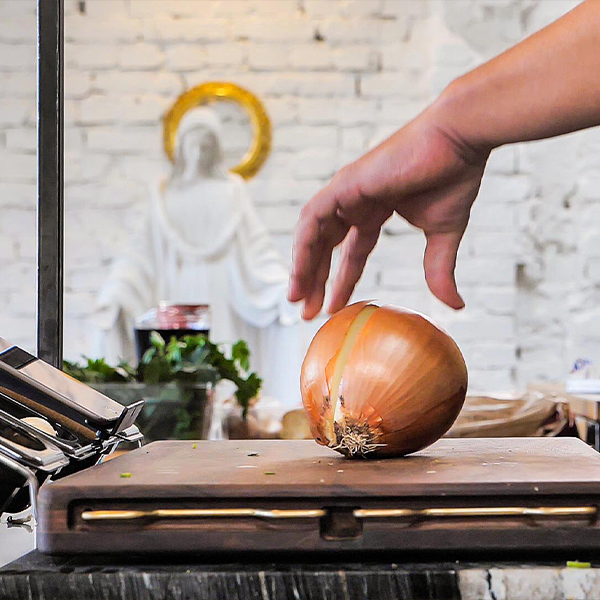
1 - Dice the roasted vegetables, mushrooms, shiitake, and onion.
2 - Heat the pot with a little oil and add half of the diced roasted vegetables and mushrooms. The goal is to roast the vegetables as strongly as possible in a controlled way; some parts can get quite black.
Therefore, the rule is
- The bottom of the pot should just be covered with the vegetable cubes.
- Let the vegetable cubes sit for a moment, carefully check the browning progress.
- When it’s brown enough, stir once to let the cubes take on color from another side.
- then transfer the vegetables to another container and repeat with the rest of the vegetable cubes.
3 - When the pot is empty after the last frying step, pour in some red wine, bring it to a boil, and scrape the burnt residues from the bottom of the pot thoroughly and with enough force using a spatula.
These residues and the browning on the vegetables and meat later give the whole dish its dark color and strong roasted flavors.
Meanwhile, there shouldn’t be too much wine in the pot – scraping motions can easily cause excessive waves, risking burning and overflow. Once the bottom of the pot is reasonably clean again, return the roasted vegetables to the pot.
4 - Add the rest of the wine, tomato paste, plum jam, mustard, and soy sauce to the pot. Simply crumble the smoked tofu into the pot by hand.
5 - Hang all the spices and herbs, garlic, ginger, and parsley stems in a sieve inside the pot or blend them into a paste and stir in. When reusing the roasted vegetables, you don’t want to bite into star anise pods.
6 - The whole mixture should then simmer gently for at least an hour. It’s best to place a lid slightly ajar to prevent too much evaporation of the valuable sauce.
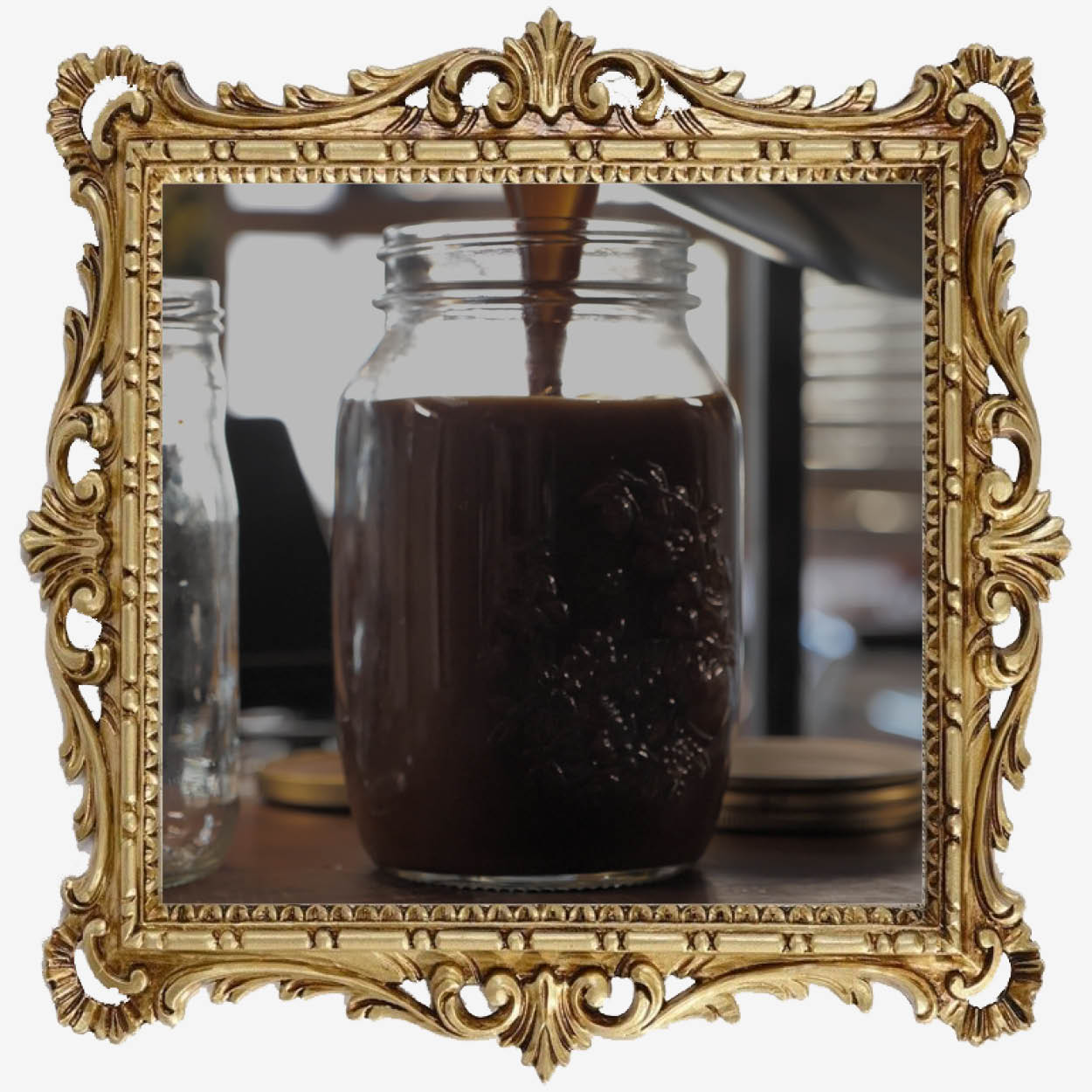
7 - After the cooking time is over, place the vegetables in a sieve over a pot and let the sauce drain off. Then put the vegetables back into the pot, pour the water over them, stir once, and immediately put them back into the sieve over the pot. This way, the remaining sauce is rinsed off the vegetables.
Cover the vegetables and put them in the fridge, then return the pot to the heat.
Season the sauce with salt, soy sauce, and a little sugar until it tastes balanced. Then thicken it with starch until it reaches the desired consistency.
Just before serving, blend in some cold butter and serve with Parmesan toast (here with oregano and young garlic) for dipping, alongside oven tomatoes and cold beer.
NOTES
A jus is a highly intense and concentrated, velvety, thick sauce based on red wine, with rich roasted aromas and a whole bouquet of spice and herb notes.
In this version, we use lots of fresh mushrooms for plenty of umami and boldness. Of course, you can use other mushrooms or dried shiitake or porcini.
Actually, you can throw quite a few things into a jus that have been sitting too long in the pantry to throw away but never quite make it to the hungry cook’s attention at the right moment.
Smoky flavor goes well with this too. We used smoked tofu here, but bacon or smoke flavoring works just as well.
Plum jam, tomato paste, mustard, and soy sauce create body and a savory base note, binding all the flavors beautifully into a dense, warm, slow-dripping bowl full of happiness.
Just before serving, it’s classic to blend in a few cubes of cold butter; this makes the sauce creamier and richer—and the diners too, of course.
-
We want to reuse the vegetables for the lasagna, so we made sure that all the seasonings—herbs, garlic, ginger, and spices—can release flavor into the sauce through a sieve but can also be easily removed afterward.
You can also put everything together in a blender and make a kind of fine spice paste to stir into the sauce.
This is even better, but we thought of it too late. To be honest.
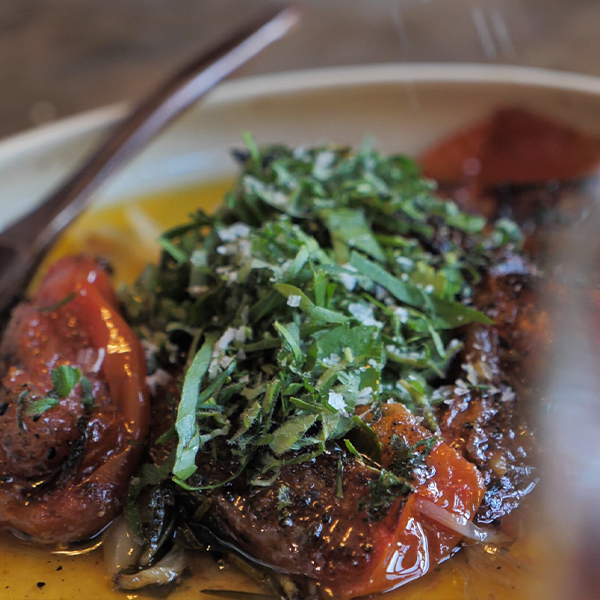
Oven tomatoes
// Spicy-sweet. Unbeatable delicious. And so damn simple.
Oven tomatoes - one of our absolute classics.
They are a variation of classic confit tomatoes, which are slowly cooked with plenty of oil and spices at 100 degrees for several hours.
Our version relies on intense heat, lots of caramelized sugar, and our now finely balanced spice blend, which also gets strong roasted notes.
In the oil beneath the tomatoes swim garlic, rosemary, and thyme, imparting flavor to the oil, which is then perfect for dipping bread or turning into a salad dressing.
The tomatoes taste best lukewarm, with toasted rye bread, in a salad, or as a great side for almost anything.
Salt and sugar are sprinkled as evenly as possible like seeds over the tomatoes – the amounts may seem quite unusual at first glance but have proven absolutely effective.
The result is intense, warm, sweet tomatoes that melt in your mouth and have so far been exceptionally enjoyed by everyone.
Almost the best part is the apparent NON-spectacle when the oven tomatoes first come to the table – and the almost ecstatic reactions to the first bites. Understatement at its best.
- THE BOARD SESSIONS | VOL.25
- “Oven Tomatoes"
scalable as desired
------
- 1 kg tomatoes
- 500 ml good olive oil or other
- vegetable oil
- 15 g sugar
- 7 g salt
- 1 tbsp ground nigella (black cumin)
- 1 tbsp ground fennel seeds
- ½ tbsp cinnamon
- ½ tbsp pepper
- ½ tbsp cumin
- 1 bulb garlic
- 3 sprigs rosemary
- ½ bunch thyme
STEPS
1 - Preheat the oven to 250°C fan.
2 - Meanwhile, remove the stems from the tomatoes and cut them into sixths.
3 - Then mix the tomato wedges in a large bowl with the vegetable oil.
This way they get evenly coated with oil, allowing salt, sugar, and spices to stick better.
4 - Smash the garlic cloves flat with the broad side of a knife and place them with rosemary and thyme on a baking sheet.
5 - If needed, crush the dry spices together in a mortar or – a very useful purchase – use a small electric coffee grinder.
6 - Now place the oiled tomatoes, skin side down, on the baking sheet lined with garlic and herbs, sprinkle the spice mix, salt, and sugar evenly over them, and roast in the oven for about 25 minutes.
If the oven has a ventilation function, feel free to turn it on; this will dry and intensify the tomatoes even more. If not, you can occasionally air out the kitchen by briefly opening the oven door to release moisture.
7 - The tomatoes should be well charred. When the time is up, carefully open the oven and take out the oven tomatoes to cool.
They taste best lukewarm, so if they’re not eaten right away, let them temper a bit after storing in the fridge.
These tomatoes are also a great side dish for hummus & bread, or for pasta instead of sauce.
NOTES
- THE BOARD SESSIONS | VOL.25
- “LASAGNA"
with "recycled" vegetables
Actually a combination that couldn’t be better: spending hours in the kitchen on Saturday during the day, relaxing your soul and producing jus on the side, then on Sunday cooking the ultimate lasagna heaven for family or friends with 5 quick steps from the leftover jus.
The recipe below is fairly loose - basically, everyone can make lasagna and precision really doesn’t matter. You have to put a little effort into the béchamel, but the important thing is the roasted vegetables, which are already prepared from the day before.
IMPORTANT: Cover the finished lasagna with aluminum foil for baking and only uncover at the end. This way you can gratinate the cheese au point - nicely browned and crispy in places, but still wonderfully juicy and stringy.
1 - Stretch the roasted vegetables of the jus with canned tomatoes and season with salt & pepper.
2 - Prepare a classic béchamel - melt butter in a pot until foamy, then dust with flour until all fat is bound. Let the flour mixture sweat a little, stirring constantly with a whisk. Then gradually add milk.
We still had fresh herbs left from the day before and brewed a kind of "herbal tea" (in this case thyme, rosemary, sage, oregano, bay leaf) and gave the otherwise somewhat bland béchamel sauce a nice twist. Simply replace part of the milk with the "tea."
3 - Season with salt, pepper, and nutmeg and bring to a boil once.
4 - Stack the lasagna in an oven dish, starting with a layer of béchamel sauce. Then lasagna sheets, followed by tomatoes, then zucchini slices, then lasagna sheets. Repeat until all ingredients are used.
5 - Generously add cheese of your choice on the top layer of lasagna sheets. We used Scarmoza, Mozzarella, Parmesan, and Taleggio - recommended, but you can hardly go wrong.
6 - Cover the lasagna with aluminum foil. This allows the lasagna to cook through without burning the cheese layer.
7 - Bake the lasagna for 20 minutes at 180° Celsius with convection.
8 - Remove the aluminum foil, gratinate the lasagna under top heat for another 15 minutes
RECIPE: JOHANNES & JOSEPH SCHREITER | PICTURES & VIDEOS: FRANKFURTER BRETT GmbH

At the stove
+
JOSEPH & JOHANNES SCHREITER |
Johannes cooks, and Joseph writes.
Everyone does what they can.
Then we eat together.